
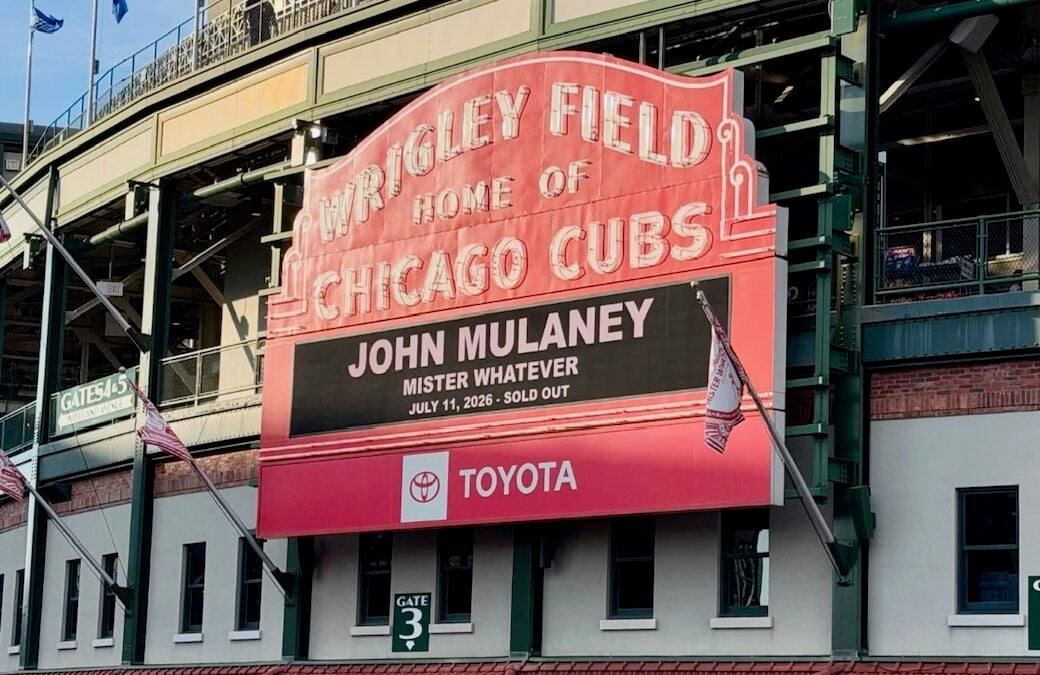
Was anyone at Wrigley on Saturday night to see John Mulaney’s historic performance?
The first comedian ever to headline and completely sell out Wrigley Field.
Buddy Guy. Richard Kind. Fred Armisen. David Letterman. An unforgettable lineup of special guests.
For those of us lucky enough to be in the audience, it felt like a bona fide love letter to Chicago.
As we were walking out of Wrigley, one thought kept coming back to us: the best communicators don’t simply speak to an audience. They make the audience feel like they’re an integral part of the story. And that’s something we think about a lot.
Every week, we have conversations with communications and public relations leaders across the country. Different industries. Different organizations. Different challenges. But the best leaders all share one thing in common; they know how to connect. Not just with the media. Not just with employees. Not just with customers. They connect with people.
And that’s become one of the defining characteristics of today’s communications executives.
A decade ago, many communications leaders were hired primarily for media relations expertise or crisis experience. Those skills are still essential, but the role has expanded dramatically.
Today’s Chief Communications Officers, Vice Presidents, and Public Relations leaders are expected to advise CEOs, shape business strategy, navigate AI, manage change, influence culture, and build trust with every stakeholder, from employees and investors to customers and communities.
It’s one of the reasons communications hiring has become so much more nuanced. A resume tells us where someone has worked. An interview tells us what they’ve accomplished. Neither necessarily tells us whether they’ll become a trusted advisor when the pressure is highest. That’s the equation that our clients ask us to help solve.
More often than not, they aren’t asking us to find someone who can simply “do communications.” They’re looking for someone who can influence a leadership team, simplify complexity, and communicate with credibility when every word matters. And those leaders aren’t always the most visible candidates. They’re often the ones quietly making organizations stronger behind the scenes.
LinkedIn can identify thousands of communications professionals in seconds. AI can summarize resumes almost instantly. But neither can tell you who has earned the confidence of a CEO, who can unite an executive team during uncertainty, or who has the judgment to protect a company’s reputation when the stakes are highest. Those insights still come from relationships, conversations, and experience.
Watching John Mulaney command a sold-out Wrigley Field was a reminder that communication has never really been about having the biggest platform. It’s about understanding your audience. Knowing your message. Creating a connection people remember long after the lights go down.
The same is true in our industry. The best communications leaders don’t just tell an organization’s story. They help define it.
We’re fortunate to spend every day talking with the people shaping the future of communications and public relations. It’s one of the reasons we love what we do and why we’re so optimistic about where this profession is headed.
Singh Hecht Executive Search is a national boutique search firm specializing in the areas of public relations, communications, and marketing.